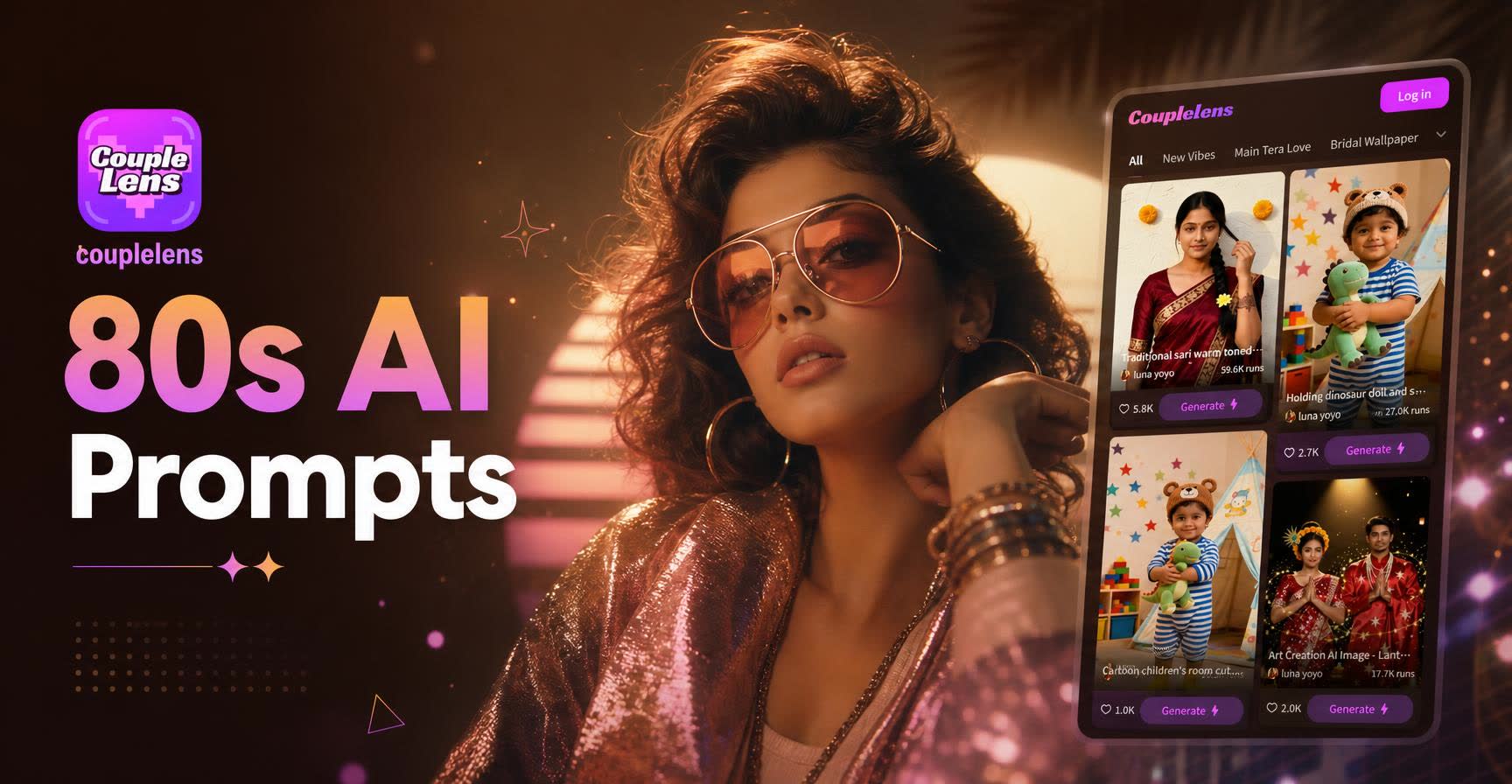
80s AI photo prompts turn a current portrait into a period-style image with the right clothes, lighting, film texture, pose, and background. The best results do more than add a faded filter: they describe the camera look, the decade-specific styling, the relationship between two people, and the details that should remain recognisable.
For an Indian audience, an 80s prompt can become a studio portrait, a college canteen snapshot, a family-album print, a monsoon street scene, or a Bollywood-inspired couple frame. This guide gives copy-ready prompts, a simple way to adapt them for two people, and a CoupleLens workflow for turning separate couple photos into a shared retro moment. Use real photos only with permission, and treat the generated image as a creative reconstruction rather than a documentary record.
What makes an 80s AI photo prompt work
An 80s look is a bundle of visual choices. Include the pieces that matter to the story:
- Photo language: 35mm print, instant-camera snapshot, soft studio flash, direct on-camera flash, or a slightly underexposed family-album frame.
- Colour and finish: warm print tones, muted cyan shadows, magenta highlights, visible grain, gentle halation, dust, and a modest paper border.
- Styling: high-waisted denim, tucked-in shirts, pleated trousers, sari or salwar suit, oversized glasses, simple jewellery, leather sandals, or a windbreaker.
- Setting: a living-room sofa, photo studio, college corridor, cassette shop, railway platform, rooftop, monsoon street, or a plain painted backdrop.
- Relationship direction: standing shoulder to shoulder, holding hands, sharing an umbrella, looking at the camera, or laughing between frames.
- Identity protection: keep facial structure, skin tone, hairline, and the natural age of each adult consistent with the reference photo.
The prompt should describe the photograph you want to see. Avoid asking for “random 80s vibes” on its own; the model has too much freedom and may mix decades, clothing, or architecture.
A base 80s portrait prompt
Start with this general template and replace the bracketed details:
Create a realistic 1980s-inspired photograph of [person or couple] in [location]. Use [clothing and accessories], a [camera and lighting style], warm printed colours, gentle film grain, slight halation around highlights, natural skin texture, and a candid documentary pose. Keep the subject's facial structure, skin tone, hairstyle, and age consistent with the reference photo. Make the image feel like a carefully stored family-album print from the mid-1980s, with period-appropriate objects and no modern phones, logos, or text.The last sentence is a useful negative direction. It removes the most common time-travel errors without forcing an artificial “negative prompt” section.
10 copy-ready 80s AI photo prompts
1. Indian studio couple portrait
Create a realistic mid-1980s Indian studio portrait of the two adults in the reference photos standing close together against a hand-painted blue and cream backdrop. Dress them in period-appropriate clothing: a tucked-in pastel shirt with high-waisted trousers for one person and a neatly draped sari with small gold earrings for the other. Use a soft studio flash, warm printed colours, fine 35mm grain, gentle highlight halation, and a calm direct-to-camera pose. Preserve both faces, skin tones, hairlines, and natural age. No modern phones, brand logos, watermark, or invented text.This is a strong first prompt for a couple photo because the backdrop is simple and the pose gives the model fewer opportunities to merge faces.
2. College canteen snapshot
Turn the two reference portraits into a candid 1980s Indian college canteen photograph. Show the adult couple sharing a small steel tea glass and laughing across a wooden table, with enamel cups, a ceiling fan, handwritten menu boards without readable words, and faded painted walls in the background. Use direct flash, slightly imperfect framing, warm film grain, muted reds and teal shadows, and a genuine everyday expression. Keep each face and body proportion recognisable. Remove modern electronics, contemporary clothing, logos, and legible text.3. Monsoon umbrella walk
Create a cinematic but believable 1980s Mumbai monsoon street photograph of the two adults walking under one clear plastic umbrella. Give one person a tucked-in shirt and rolled trousers and the other a simple printed sari with a practical handbag. Add wet pavement, soft rain, old shop shutters, warm sodium street light, 35mm colour-print grain, and a slightly blurred passing bus in the distance. Preserve identity and natural hands. Do not add modern cars, phone screens, brand signs, or readable text.4. Cassette and music-room portrait
Create an intimate 1980s Indian music-room portrait of the adult couple beside a wooden cassette shelf and a small tabletop radio. Use a warm tungsten lamp, deep brown furniture, a muted maroon wall, period hairstyles, simple jewellery, and relaxed shoulder-to-shoulder body language. Shoot it like a slightly faded 35mm family print with visible grain and soft flash falloff. Keep both faces, skin tones, and expressions accurate. Use fictional cassette labels with no readable brand names.5. Family-album living-room frame
Create a late-1980s family-album photograph of the two adults seated on a patterned sofa in a modest Indian living room. Include a lace table cover, a pedestal fan, framed landscape art, a small flower vase, and warm indoor flash. Dress the couple in period-appropriate everyday clothes and give them a natural, slightly formal pose as if a relative took the photo during a visit. Use gentle print fading and realistic film grain. Preserve both identities and avoid modern objects, logos, and text.6. Rooftop sunset couple photo
Make a nostalgic 1980s rooftop photograph of the two adults leaning on a low parapet at sunset, with distant water tanks, clotheslines, and a hazy Indian city skyline. Style them in high-waisted denim, a tucked-in shirt, and a bright but believable printed top. Use warm backlight, mild lens flare, 35mm grain, soft magenta highlights, and a candid glance between them. Keep the faces and hands natural, with no modern skyline features, logos, or readable signs.7. Road-trip contact-sheet look
Create a four-frame 1980s road-trip contact sheet from the two reference portraits. Show the adult couple beside a generic old sedan, at a roadside tea stall, looking through a bus window, and laughing at a viewpoint. Keep the same faces, clothing palette, and film stock across all frames. Use flash snapshots, uneven borders, warm print colours, natural grain, and small changes in pose. Do not include real car brands, modern vehicles, phone cameras, or legible location text.8. Festive Indian portrait with restrained colour
Create a respectful 1980s Indian festive couple portrait using the two adult reference photos. Place them in a simple home courtyard with marigold flowers and a small brass lamp, wearing period-appropriate festive clothing in deep green, cream, and muted red. Use a compact-camera flash, warm paper-print colour, fine grain, and a relaxed pose with one person lightly holding the other's hand. Keep both faces, skin tones, and jewellery consistent. Avoid religious symbols that were not in the reference, modern decorations, logos, and text.9. Black-and-white newspaper-studio look
Create a high-contrast black-and-white 1980s Indian portrait of the two adults in a small portrait studio. Use a plain grey cloth backdrop, hard side light, subtle silver-gelatin grain, slightly formal clothing, and a calm shoulder-to-shoulder pose. Preserve both faces, hair, and natural age. Make it look like a real printed portrait from the decade, with no colour tint, no modern props, no logos, and no text.10. Old photo restoration plus 80s styling
Recreate the two adult reference photos as one carefully printed 1980s couple photograph while keeping their real facial structure, skin tone, and age. Use a simple cream studio backdrop, period clothing, soft flash, warm faded print colours, fine grain, and a narrow paper border. Repair only distracting scratches or blur; do not smooth away natural features or change either person's identity. Remove modern objects, logos, watermarks, and invented writing.How to adapt a prompt for a couple photo
Two-person images need a little more control than single portraits. Make the relationship and composition explicit:
- Name the people as two adults. This helps avoid age ambiguity and keeps the scene appropriate for a couple audience.
- Assign one clothing direction to each person. “Both in retro clothes” is vague; “pastel tucked-in shirt” and “printed sari with small earrings” gives the model a clearer division.
- Choose one physical interaction. Holding hands, sharing an umbrella, or sitting shoulder to shoulder is easier to render than “romantic chemistry” alone.
- Protect faces and hands. Ask the model to preserve each face and check the result at full size before sharing it.
- Keep text outside the generated image. Add names, dates, captions, or a playlist title in a design editor after generation.
Use CoupleLens for a shared 80s moment
CoupleLens is positioned around creating couple photos and videos from two people's photos. Its homepage describes romantic scenes, playful interactions, moving memories, and phone-friendly creation. That makes it a natural step after you have chosen the retro direction: upload two consented adult reference photos, select the closest couple-photo or shared-style option available in the live product, and use the prompt or style direction that matches the 80s scene.
CoupleLens does not publish a verified standalone “80s AI Photo Prompts” effect in the supplied product information. Treat the prompts in this guide as creative direction, then check which current couple-photo effect best fits the pose, wardrobe, and setting. If you want motion, use the resulting couple image in the current video workflow and keep the movement small: a turn toward each other, a shared laugh, a gentle camera push, or a slight film-print reveal.
A practical CoupleLens workflow
- Choose two clear source photos. Use front-facing or three-quarter portraits with visible faces and similar lighting. Ask the other person before uploading their image.
- Pick the relationship scene. Decide between a studio portrait, umbrella walk, sofa snapshot, or music-room pose before you generate.
- Add the decade controls. Include the clothing, setting, camera language, film finish, and one physical interaction from the prompt library above.
- Review identity and context. Check faces, hands, jewellery, age, and background objects. Do not present a generated scene as proof that the couple visited a real place or attended a real event.
- Animate only after the still works. A short photo-to-video pass can add a look, smile, or camera movement, but it cannot repair a weak couple composition.
- Add final copy in a separate editor. Keep captions, dates, handles, and music credits editable and readable.
India-friendly 80s details that stay believable
The decade should feel lived in rather than assembled from stereotypes. Use one or two local cues that support the scene:
- a steel tea glass, cassette shelf, pedestal fan, or lace-covered side table;
- sari, salwar suit, tucked-in shirt, high-waisted trousers, denim, or simple festive clothing;
- a monsoon street, college canteen, rooftop, family living room, railway platform, or painted studio backdrop;
- muted print colours, direct flash, warm tungsten, or black-and-white studio contrast;
- a generic old sedan or bus window without a real manufacturer badge;
- a short caption added later in English, Hindi, or the couple's preferred language.
Fix common 80s prompt problems
- The result looks too modern: add the camera, print, wardrobe, and background details together; remove contemporary electronics and logos.
- The faces merge: use simpler shoulder-to-shoulder poses, clearer source photos, and one interaction at a time.
- The clothing mixes decades: specify one decade-appropriate outfit for each person and remove generic “fashionable” language.
- The image looks like a costume shoot: add everyday props and imperfect framing, not only neon colours and dramatic poses.
- The printed text is wrong: remove tiny AI-generated text and add the final wording later.
- The result feels like a real event record: label it as AI-assisted when viewers could misunderstand the scene, and keep the caption factual.
Rights and sharing checks
Use photos of real people only with permission. Check the current CoupleLens rules before using generated images in paid work, client projects, printed products, or advertisements; the supplied product information does not provide a blanket commercial-use authorization or a fixed price. Also verify rights for any music, logos, film references, or location-specific marks added during editing.
Frequently asked questions
What are 80s AI photo prompts?
They are instructions that combine 1980s clothing, settings, camera language, colour, film texture, pose, and identity-preservation details to create a period-style image from a modern reference photo.
Can I use these prompts for two people?
Yes. State that the image contains two adults, assign clothing to each person, choose one simple interaction, and ask the model to preserve both faces and body proportions.
Can CoupleLens create an 80s couple photo?
CoupleLens supports creating couple photos and videos from two people's photos, including romantic scenes, shared styles, and relationship moments. No dedicated 80s effect URL was verified for this article, so use the prompt library as creative direction and choose the closest live couple-photo option.
Which image size should I use?
Use 9:16 for Instagram Reels, Stories, and WhatsApp Status; 4:5 for an Instagram feed post; 1:1 for a square profile or card; and 16:9 for a banner or YouTube thumbnail. Keep an uncropped master so you can make each version later.
Should I add the caption inside the prompt?
Usually no. AI generated lettering can be distorted. Create the visual first, then add names, dates, captions, and credits in a separate editor.
Can I use a real film star or a branded 1980s poster?
Only when you have the relevant rights and the use is permitted. A generic retro cinema mood, colour palette, or studio pose is easier to publish safely than a recognizable celebrity or copyrighted poster.
An 80s AI photo prompt works when it gives the model a complete visual brief: who is present, what they wear, where they are, how the camera sees them, and what should remain recognisable. Choose one scene, generate the couple image with permission, inspect faces and hands, and then add the final caption outside the image. To create a shared retro memory from two photos, try CoupleLens and choose the current couple-photo workflow that matches your scene.