Building Your AI Filmmaking Workflow: From Script to Screen
The creative process for filmmaking has remained largely unchanged for decades. It involves a complex chain of ideation, pre production, production, and post production, often constrained by budgets, timelines, and resource availability. The modern AI filmmaking workflow integrates artificial intelligence at key touchpoints to streamline this chain, empowering solo creators and small teams to produce high quality content with unprecedented speed and creative flexibility.
The Four Pillars of a Modern AI Filmmaking Workflow
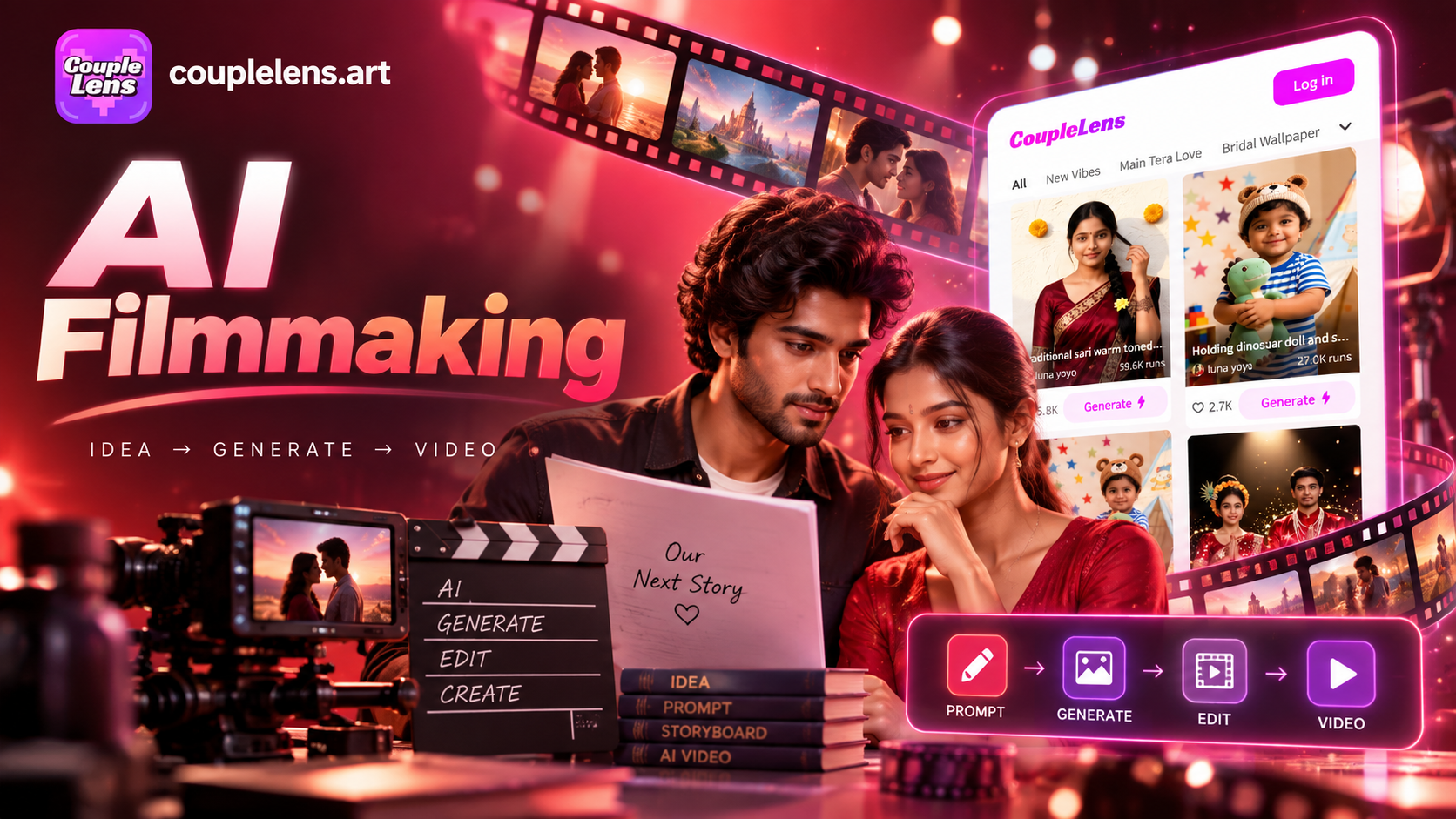
A cohesive AI filmmaking workflow isn't about using one magic tool. It's about strategically connecting specialized AI applications throughout your project's lifecycle. The most effective pipelines are built on four core pillars.
1. Concept Development and Scripting
The workflow begins with the idea. AI can act as a creative co pilot during this brainstorming phase. Tools can generate plot concepts, character backgrounds, and thematic prompts based on a few keywords. For scriptwriting, AI assists with structure, dialogue variations, and even formatting, allowing you to focus on refining the story's emotional core rather than administrative details. This stage transforms a vague notion into a solid, structured foundation.
2. Dynamic Pre-Visualization and Storyboarding
Translating a script into a visual plan is a critical, yet time consuming step. AI revolutionizes pre visualization. You can feed your script descriptions or simple prompts into an AI image generator to instantly create compelling visual concepts for scenes, characters, and settings. This allows for rapid iteration on mood, composition, and color palette long before a single frame is shot or generated. You can build a detailed, visual storyboard in hours instead of days, ensuring your entire team shares the same creative vision.
3. AI-Powered Content Generation
This is the heart of the new workflow. Depending on your project, this stage can involve several approaches. For fully animated or conceptual projects, text to video AI can generate initial shot sequences based on your storyboard prompts. For live action projects, AI can be used to create stunning visual effects, digital sets, or even generate realistic characters for scenes that are logistically or financially impossible to film. Tools like CoupleLens further enhance this by allowing for style transfer, enabling you to apply cinematic filters (like cyberpunk, noir, or Ghibli style) to your generated or filmed footage, creating a consistent and professional aesthetic.
4. Intelligent Post-Production and Editing
The final pillar focuses on polishing and assembly. AI driven editing software can now analyze raw footage, suggest the best takes, and even create rough cuts based on the pacing of your script. AI tools excel at color grading, sound design enhancement, and automated subtitle generation. They can also upscale low resolution footage, remove unwanted background noise, and stabilize shaky shots, dramatically reducing the technical burden in the edit suite and letting you concentrate on narrative flow.
Practical Steps to Implement Your Workflow
Adopting an AI filmmaking workflow is an iterative process. Start by mapping your current creative process and identify one bottleneck. For example, if storyboarding is slow, begin by integrating an AI image generator. Use it to create key frames for your next project. Once comfortable, add another tool, like an AI script assistant for your next short film's dialogue polish.
The goal is augmentation, not automation. You remain the director. AI handles the heavy lifting of iteration and execution, freeing you to make more creative decisions faster. Tools like the CoupleLens app demonstrate this perfectly, placing a suite of generation and stylization features directly in your pocket, making high end visual experimentation accessible anywhere.
Overcoming Common Challenges
New workflows come with learning curves. A primary challenge is maintaining a consistent visual style across AI generated elements. The solution is using detailed, consistent prompts and leveraging reference image features in your tools. Another concern is the "AI look." To avoid generic results, use AI generation as a base layer. Always bring the output into traditional editing software for compositing, color correction, and adding handmade imperfections that give your film a human touch. The most successful projects use AI for 80% of the grunt work, reserving 20% for human artistic refinement.
The Future of the Creative Pipeline
The AI filmmaking workflow is rapidly evolving from a novelty to an industry standard. As models become more sophisticated, we will see tighter integration between different stages. Imagine an AI that can read your script, generate a storyboard, produce a rough animatic, and suggest an edit timeline all within a connected ecosystem. For creators, this means democratizing high production value. The barrier to realizing a cinematic vision is no longer a massive crew and budget, but a clear idea and mastery of the new digital toolkit. By embracing this workflow, you future proof your creative process, unlocking a new era of storytelling potential.